

Dazzling novel. Moreover, the English translation is simply exquisite. Read and lend.
Dazzling novel. Moreover, the English translation is simply exquisite. Read and lend.

A rather optimistic conclusion from a myriad of entertaining anecdotes.
 It’s as good as travel writing gets. Rory Stewart (his profile by Ian Parker in the New Yorker) is not ashamed of being an outsider, yet his cultural insights are unique. Footnotes in this book are as important as they are in Arden Shakespeare editions.
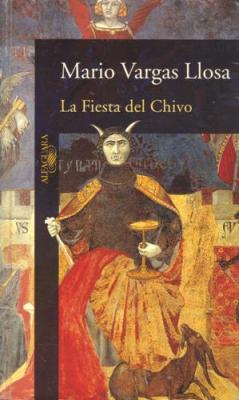
Tremendous novel.

Erudite conversation on the history of ideas in the 20th century. Judt’s biographical sketches and the historical discussion of intellectual circles before World War II are sublime. A lot of the economics is entertainingly misguided.

This story – a great childhood memory – accompanied me on best return journey from Ladbroke Grove to Piccadilly Circus I’ve ever had.
In the New York Review of Books William Nordhaus takes on the scientists who cite his economics research as evidence that nothing ought to be done about climate change:
We need to approach the issues with a cool head and a warm heart. And with respect for sound logic and good science.


Read it, lend it. Wonderful collection.
What a nice gift.
If you cannot force yourself to read 21 mutually inconsistent accounts of the financial crisis, Andrew W. Lo of MIT Sloan has summarised them here for an upcoming Journal of Economic Literature article.

A savage, astute, and hilarious attack on the abuse of scientific terminology in humanities and social sciences. It really makes it difficult to take Lacan seriously after reading this book.
Published in The New Yorker and is apparently a reduced version of his novel Capital. Sardonic, cruel, precise and hilarious.
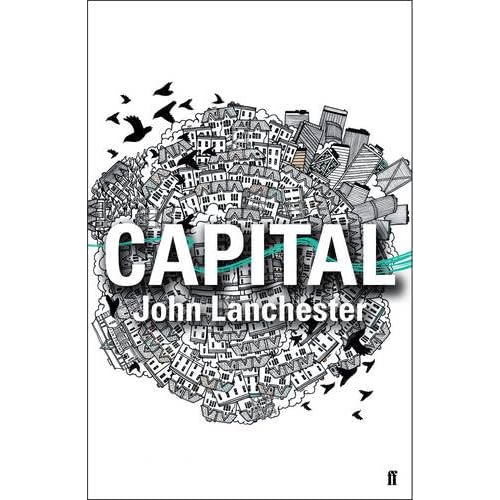
She is probably the world’s greatest living free-market intellectual (or in her words “a postmodern free-market quantitative rhetorical Episcopalian feminist Aristotelian woman who was once a man”). I gave her a book of poems by Bernard O’Donoghue, who teaches Middle English at Wadham. She immediately recited:
Whan that Aprill, with his shoures soote
The droghte of March hath perced to the roote
And bathed every veyne in swich licour,
Of which vertu engendred is the flour;
Whan Zephirus eek with his sweete breeth
Inspired hath in every holt and heeth
The tendre croppes, and the yonge sonne
Hath in the Ram his halfe cours yronne,
And smale foweles maken melodye,
That slepen al the nyght with open eye-
(So priketh hem Nature in hir corages);
Thanne longen folk to goon on pilgrimages
And palmeres for to seken straunge strondes
To ferne halwes, kowthe in sondry londes;
And specially from every shires ende
Of Engelond, to Caunterbury they wende,
The hooly blisful martir for to seke
That hem hath holpen, whan that they were seeke…
A poignant new collection from Wadham’s best living poet. Ireland, exile and death. “The Old Second Division”, “Racho”, “Dockets”, “Dream”, “Canon”, “Casella”, “Tinkers” and “The Year’s Midnight” (dedicated to the memory of Andrew Glyn) are exquisite. I’ll quote the shortest poem.
Tontine
Survivor takes all, we reflect,
standing together in the rain
outside the crematorium
under the heron’s raucous boom
as the crows mob him overhead.
by Bernard O’Donoghue

Erudite and devastating critique of the precautionary principle, but it left me wondering if measures advocated by libertarian paternalism will be sufficient to manage risk in democracies.
